#114: My Man Godfrey
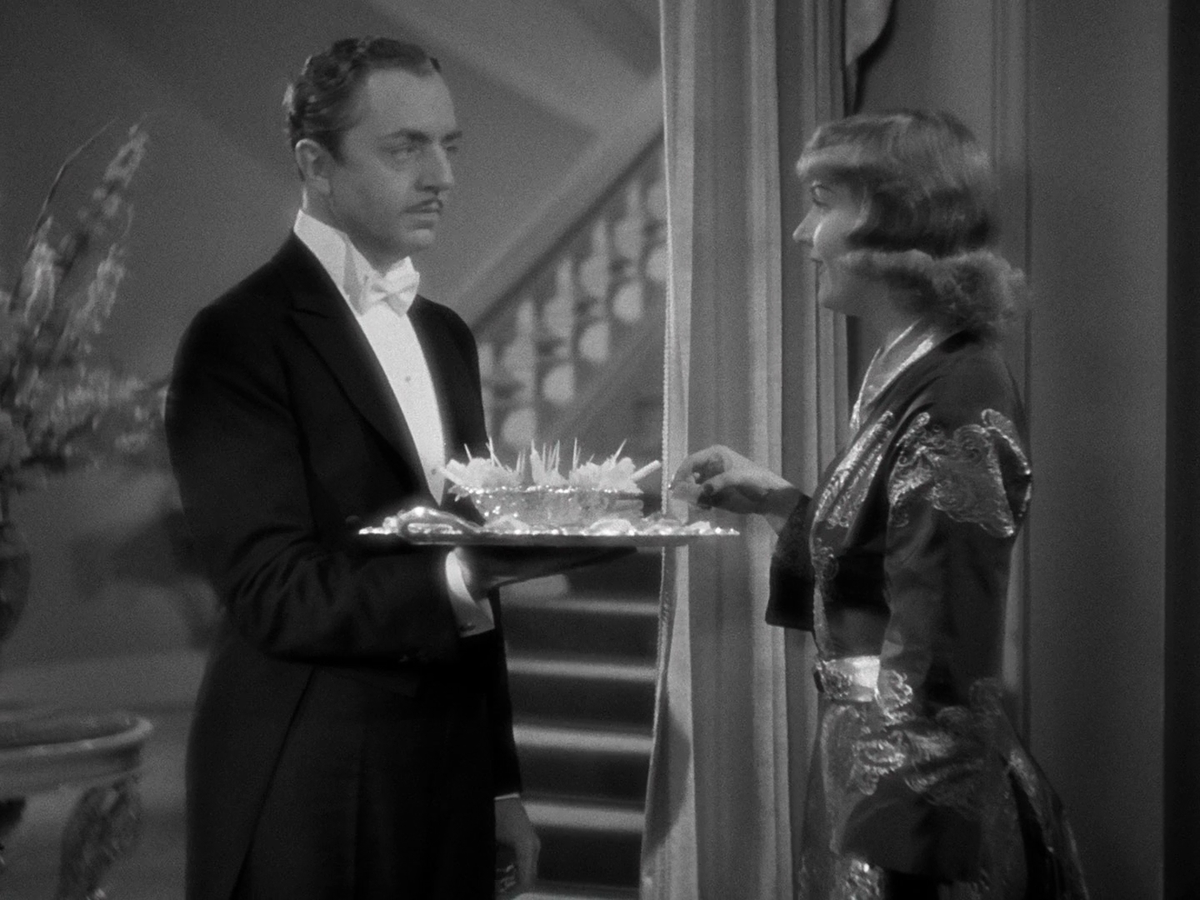
My Man Godfrey, 1936, directed by Gregory La Cava, screenplay by Morrie Ryskind & Eric Hatch, from the novel by Eric Hatch.
I’m told by people who’ve seen them projected that nitrate prints had a sparkling, shimmering quality that safety stock was never able to reproduce. If I had access to nitrate prints (and a brave projectionist), the first film I’d like to see in its original splendor is, without a doubt, Swing Time. And then Trouble In Paradise and The Thin Man and Top Hat. But somewhere around day three, provided the theater hadn’t burned down, I’d send out for champagne and Gregory La Cava’s My Man Godfrey, a film that was clearly designed to sparkle and shimmer. You know what you’re getting right from the opening titles:
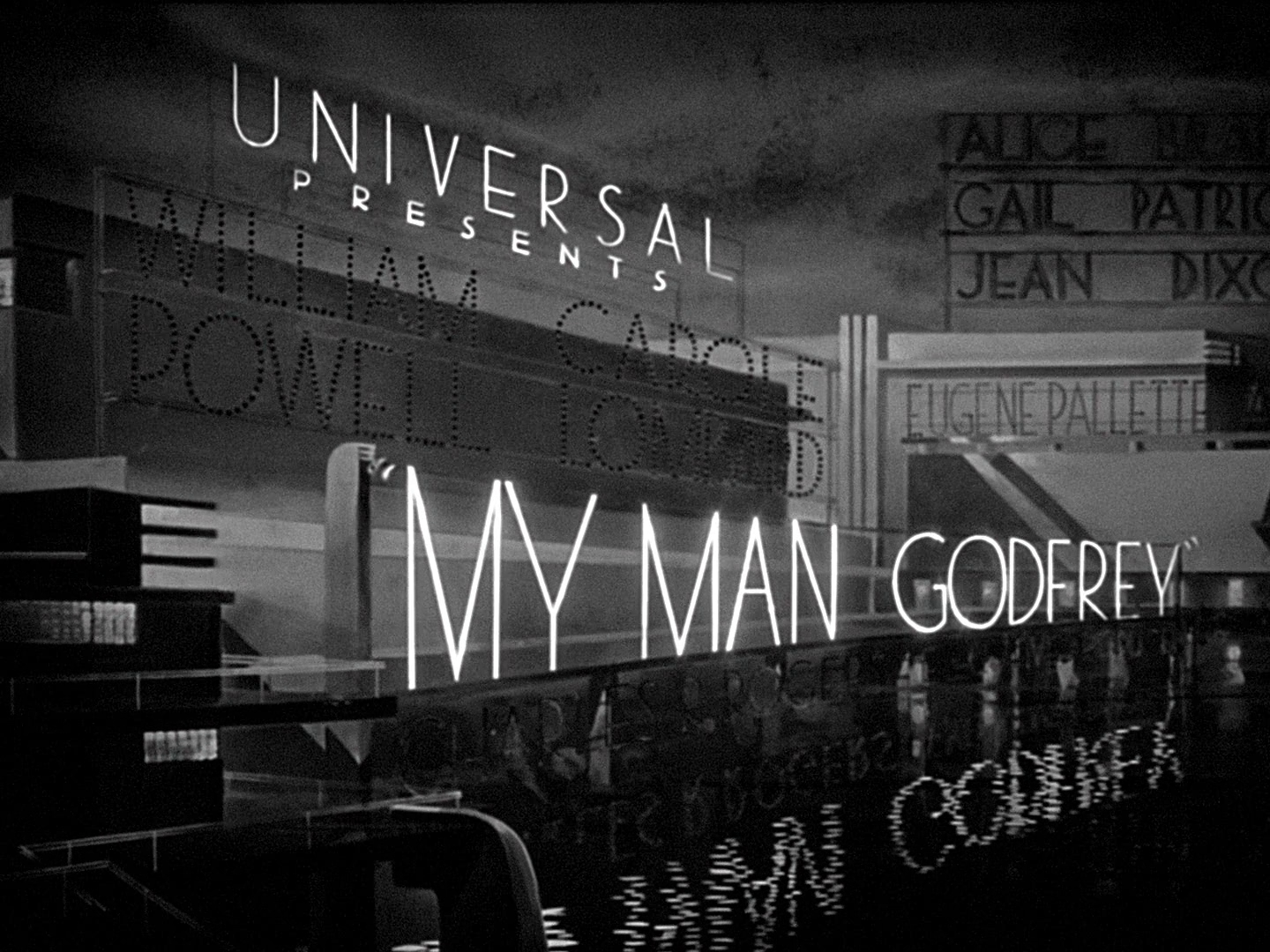
Those lights promise the kind of art deco wonderland where Rogers and Astaire spend most of their time. And La Cava delivers, but not right away. The camera pans over the waterfront, past the lights of the credits, before settling on decidedly less glamorous surroundings: a Hooverville built on top of a dump.
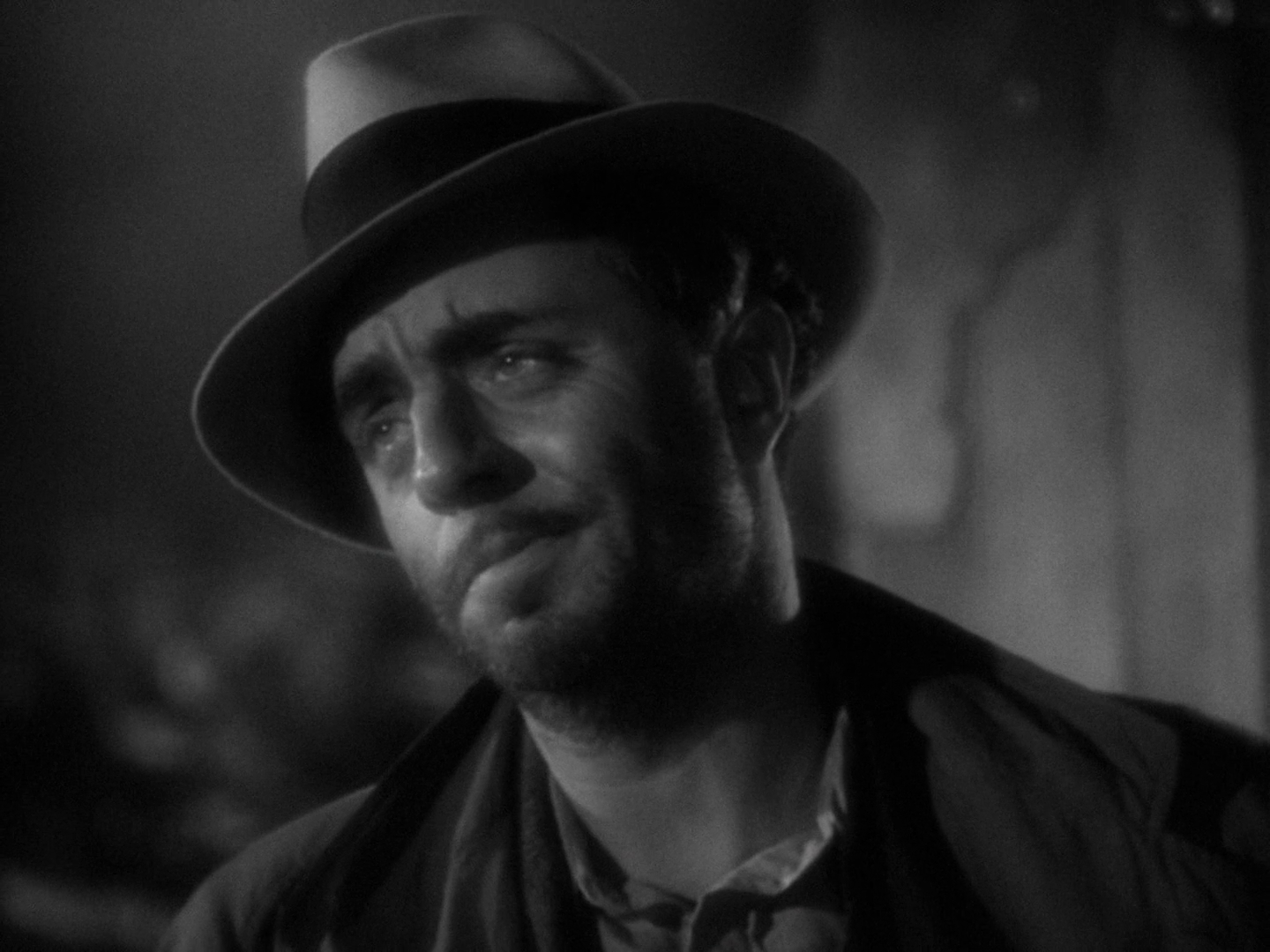
The glamour the credits promised arrives at the dump in the form of Cornelia and Irene, the Bullock sisters. They’re the sort of oblivious-to-suffering rich person who I didn’t think existed in real life until I read Twitter during Hurricane Sandy. Cornelia, the eldest daughter (Gail Patrick), offers Godfrey five dollars to accompany her to the ballroom of the “Waldorf Ritz Hotel.” It’s not exactly a proposition: she’s competing in a gala scavenger hunt where one of the items is a “forgotten man” (in Roosevelt’s sense, not Sumner’s). Godfrey’s response, as he backs Cornelia into an ash pile, is for the ages: “I’m afraid I’ll have to take it up with my board of directors. No matter what my board of directors advise, I think you should be spanked.” No one but William Powell could pull that line off, and his delivery (and the ash pile) is striking enough to get little sister Irene (Carole Lombard) to quit freaking out about her sister beating her in the scavenger hunt and start enjoying her sister’s humiliation. Which, in turn, intrigues Godfrey enough that he agrees to go to the hotel with Irene, and we’re off to the art-deco races.
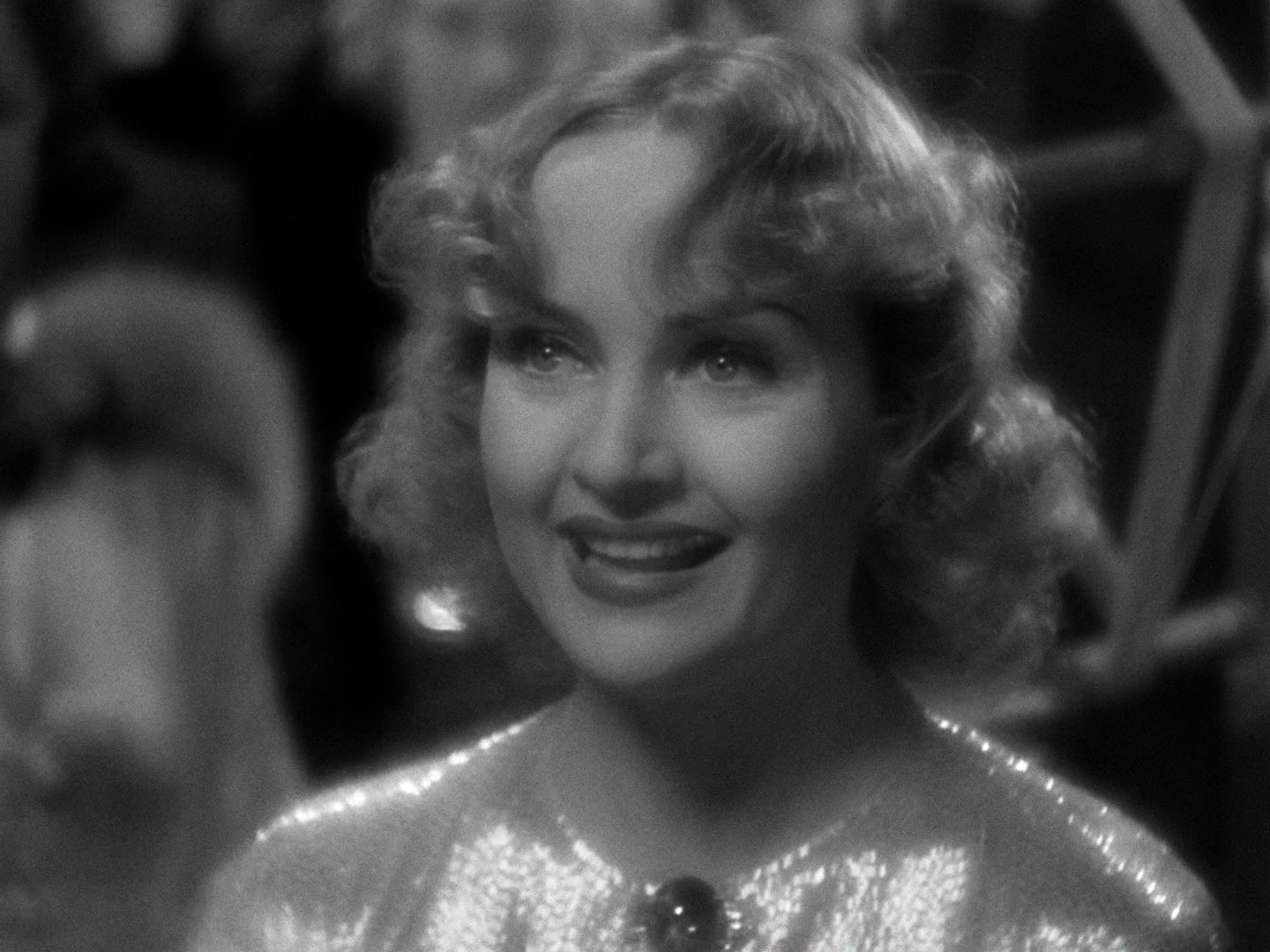
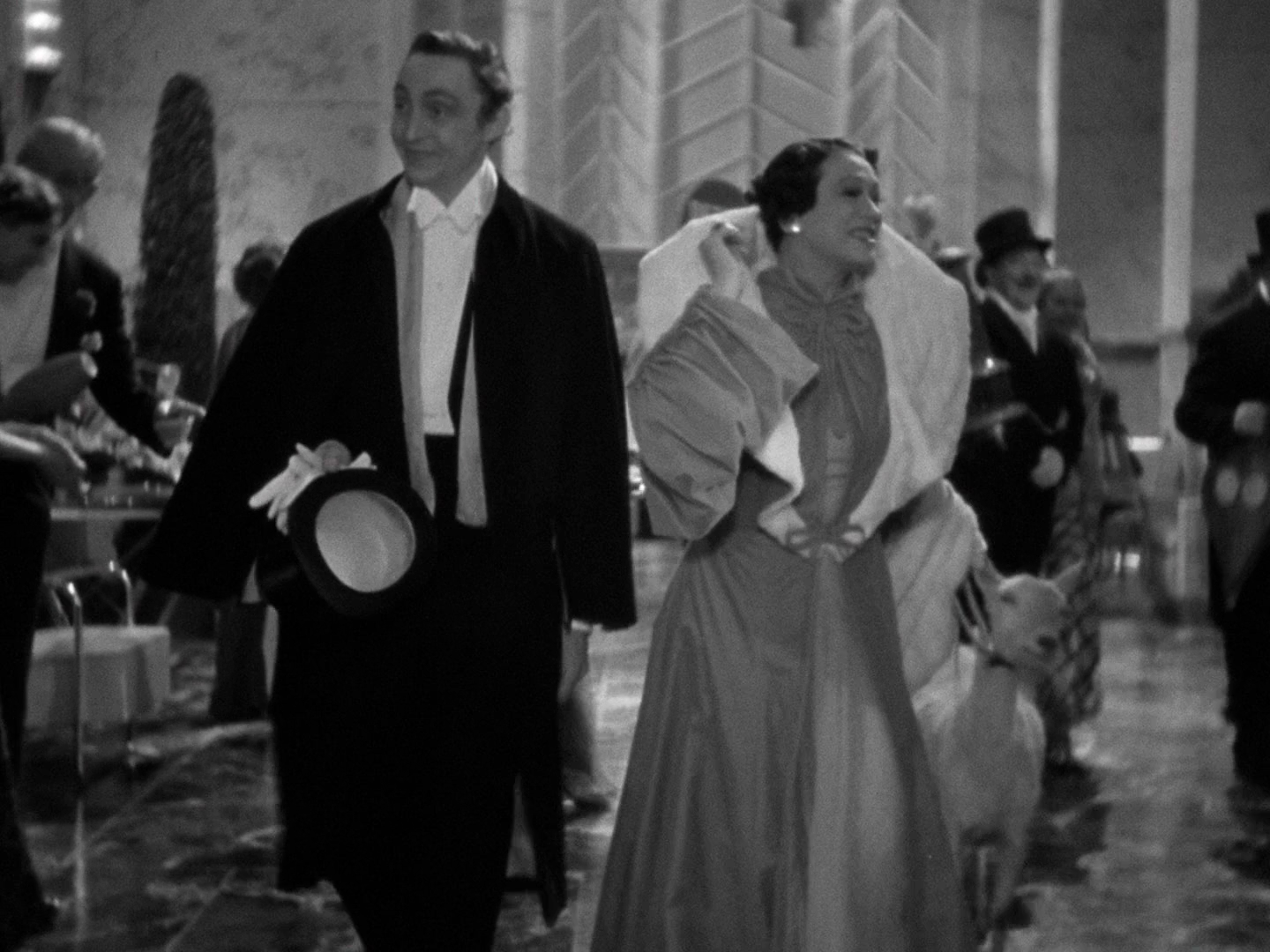
The rest of the Bullock family is even better than Gail Patrick and Carole Lombard. Eugene Pallette is as wonderful always as the beleaguered patriarch, and Alice Brady, the oblivious mother, is nearly as daffy as Lombard. We first meet Mrs. Bullock sweeping into the hotel ballroom leading a baby goat (for the scavenger hunt) and Carlo, her “protégé,” who brings roughly as much to the table as the goat.
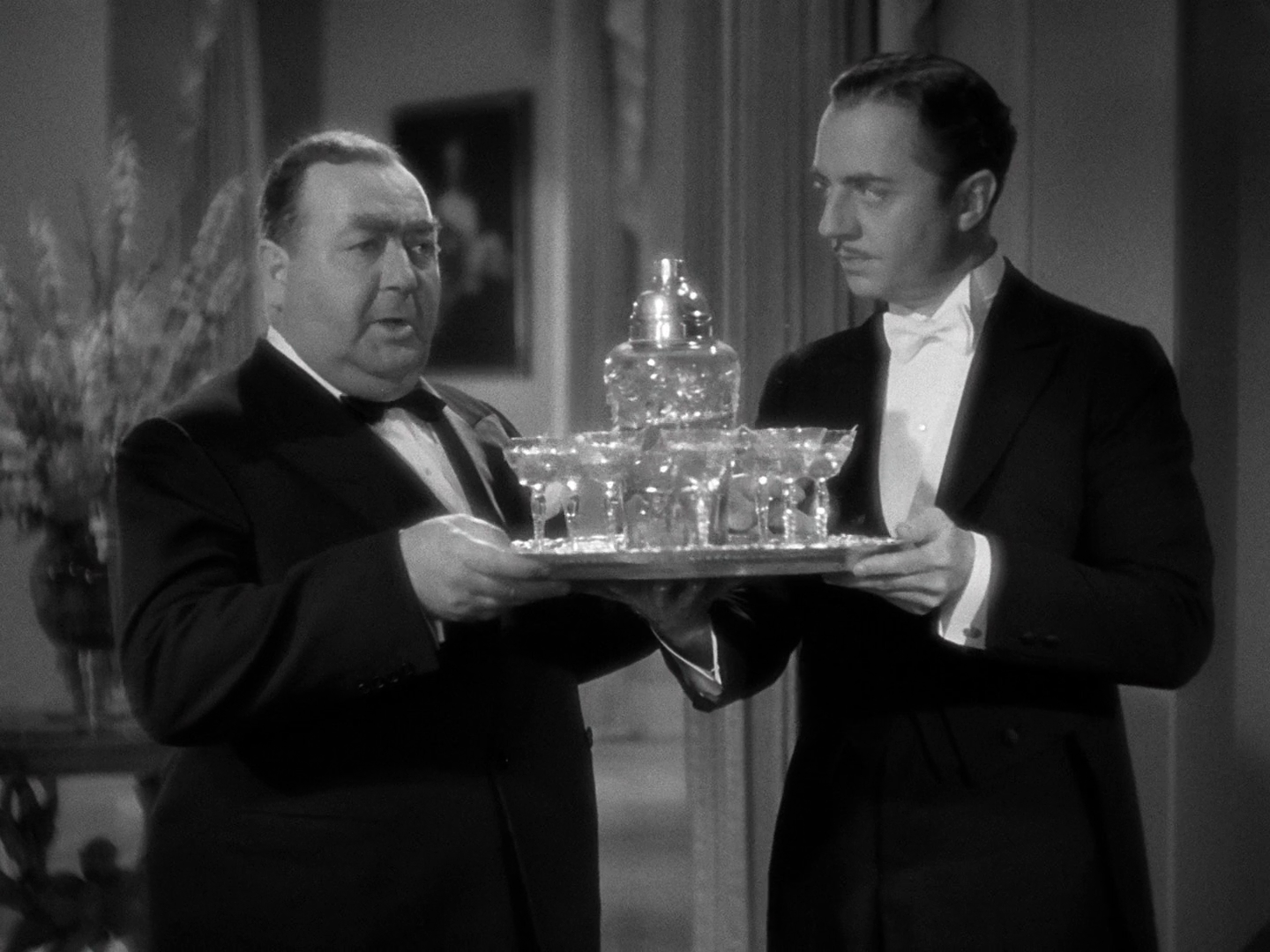
Half to spite her family and half because she’s fascinated with his contempt for the rich, Irene hires Godfrey (a homeless man she’s only met that evening, remember) to serve as the family butler, and from this thin thread hangs the plot. Godfrey turns out to be suspiciously good at butlering, delivering entire trays of martinis to Mr. Bullock with a speed and efficiency that made me want to start playing Powerball.
It’s all very fun and funny and charming, and both William Powell’s debonair charm and Carole Lombard’s loopiness are in high gear. And although Mischa Auer doesn’t have a lot to do, the scene where he imitates a gorilla to cheer Irene up is one of the high points of American cinema. But although I love it, I have to confess that My Man Godfrey has always frustrated me. Next to Pretty In Pink, it’s the most glaring example of a film where the wrong couple winds up together. Don’t get me wrong: Carole Lombard is hilarious. But the chemistry between her and Godfrey is funny but not sexy. Gail Patrick, on the other hand…
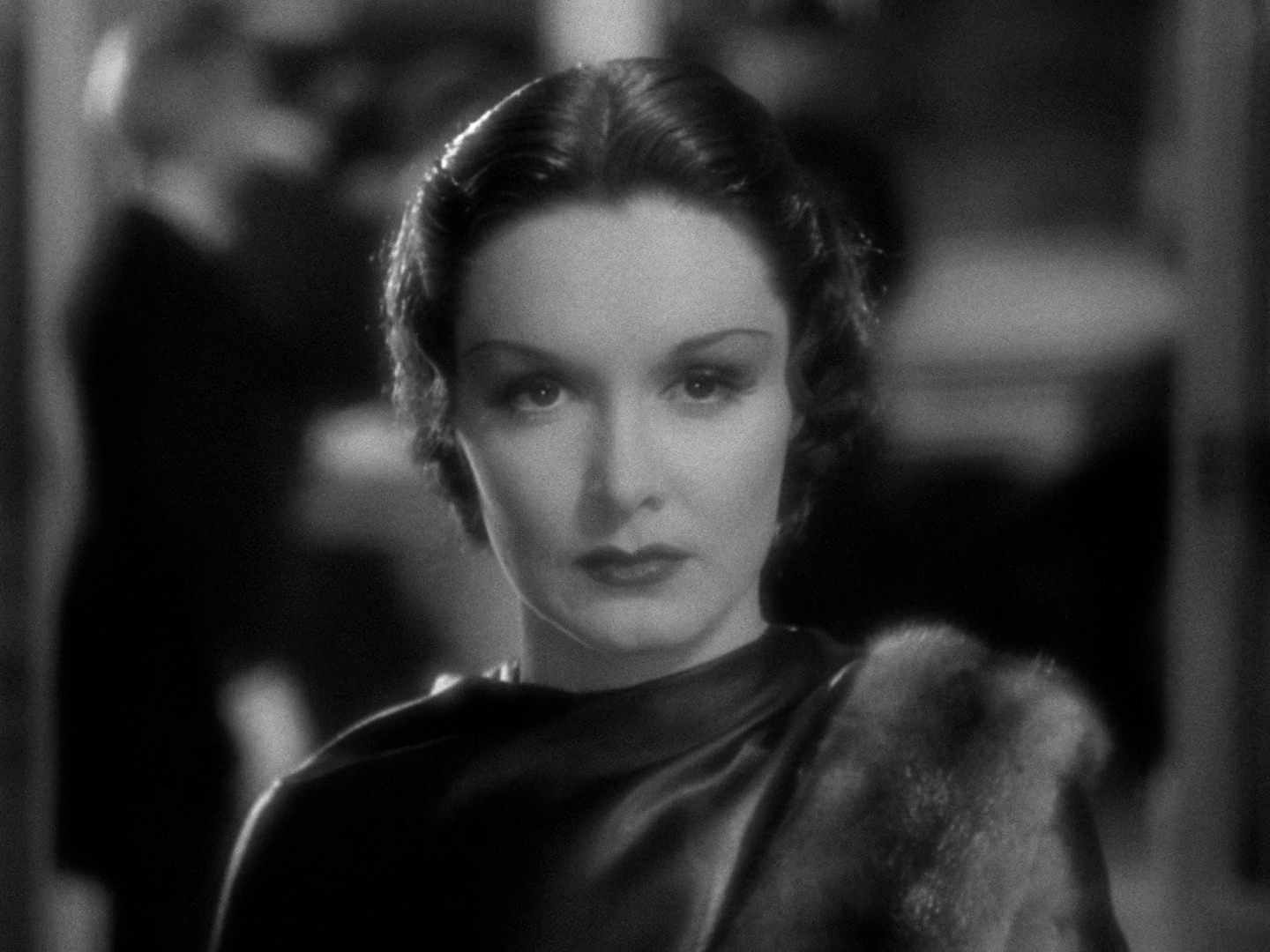
She and Godfrey have such unbridled contempt for each other in the early scenes that I was expecting them to end up together, the way they would have in every other screwball comedy ever made. And the fact is, as sweet as Lombard is, she seems like Godfrey’s little sister. Patrick is more interesting. There’s more tension in the scene where she makes Godfrey polish her shoes (while she is wearing them) than anywhere else in the film. Lombard’s role, with its loopy exuberance and lack of any particularly deep characterization, feels to me like it wants to be a supporting character, comic relief the way Mr. Bullock or Carlo are.
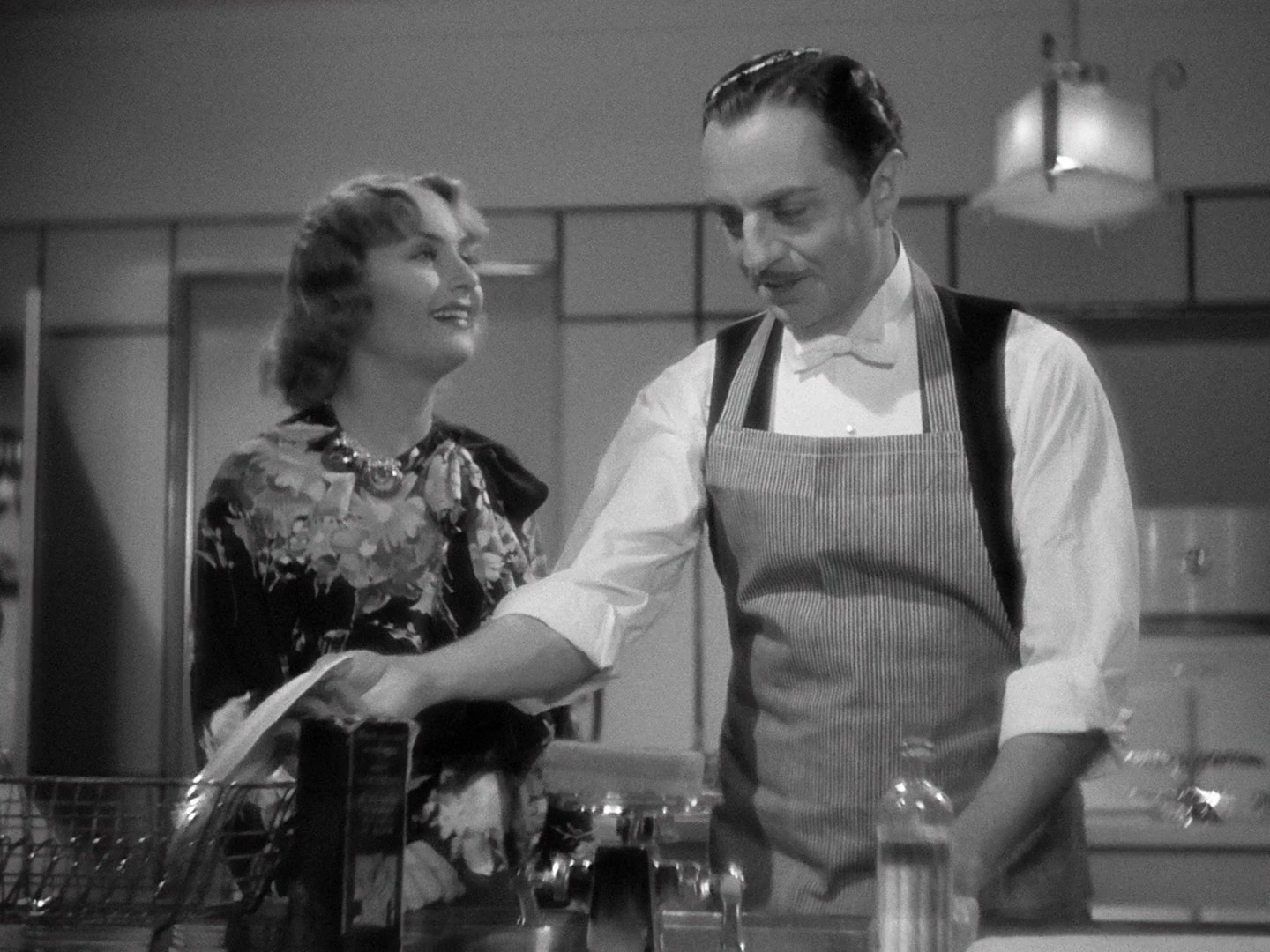
I know it’s bad form to criticize a film for not being a different movie that you’d like better. And the fact is, My Man Godfrey is exceptionally great. I just don’t see the chemistry between Powell and Lombard (despite the fact that they were married before the film was done), and I do see it between Powell and Patrick. Powell, I think, is at his best when he’s paired with someone who can throw his barbs right back at him (ideally, this would always be Myrna Loy, even if she had to wear a goatee). Irene is sweet and funny, but it’s not clear why Godfrey would feel strongly one way or the other about her, and although it’s clear what she wants, she’s not enough of a force of nature in this movie for me to believe that she’d get it, at least from Godfrey.
But perhaps it’s unfair to judge My Man Godfrey against the other great screwballs of its day. (It’s certainly unfair to compare any other film to The Thin Man, which is incomparably wonderful.) In a real screwball, the two characters who loathe each other at the beginning should end up together, and always do. In My Man Godfrey, an impossibly patient and self-sacrificing servant teaches life lessons to a wealthy white family. In other words, in structure and theme, it’s an all-white version of a Magical Negro film. Except it’s excellent.
Supplements
- Is there ever a bad time to remind you about Eugene Pallette’s Apocalypse Ranch?
- I would love to know the story behind the blooper reel that’s included on the DVD. There’s no way the cutting room floor footage would have been kept by Universal, and even if it was, no one would have synched up the sound. Blooper reels apparently started as a studio-employee-only thing in the 1930s, so perhaps this footage was cut together for a cast party? In any event, if you want to see Lombard, Powell, and Pallette swearing like actual human beings, here’s your chance.
- Ted Tetzlaff’s cinematography is remarkably fluid, craning up and down the swooping curves of the Bullock homes front stairs and moving gracefully forward and backward through the enormous rooms. I don't know if its quite right to say that My Man Godfrey uses deep focus, as the lenses don't seem to be quite as good as in, say, Citizen Kane, but it's certainly blocked in deep space. Conversations are constantly happening between people on different planes.
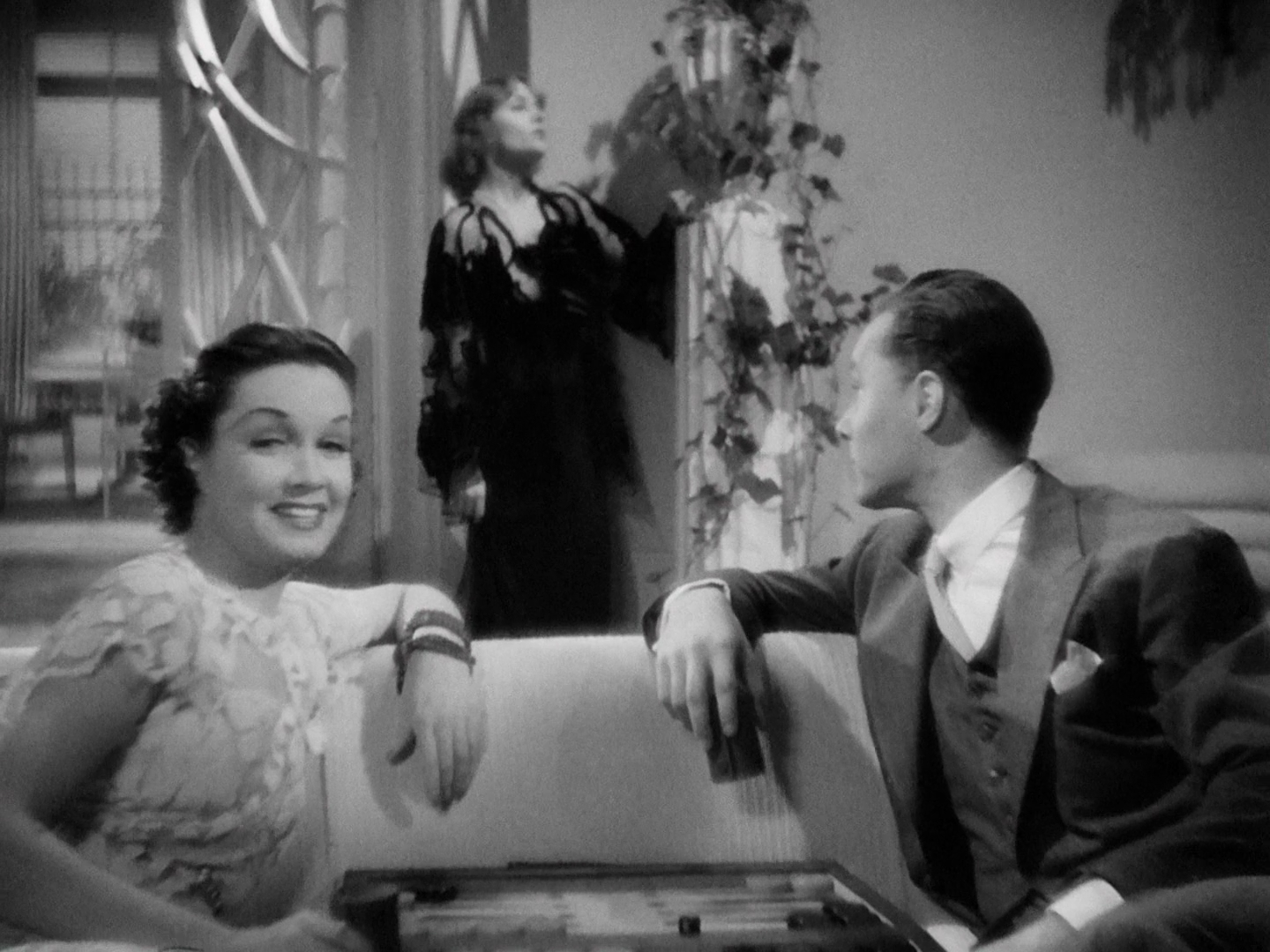
- And although it’s not The Ipcress File, there are a surprising number of compositions with foreground objects drawing attention to the third dimension: martini glasses, flower arrangements, and lamps, lamps, lamps.
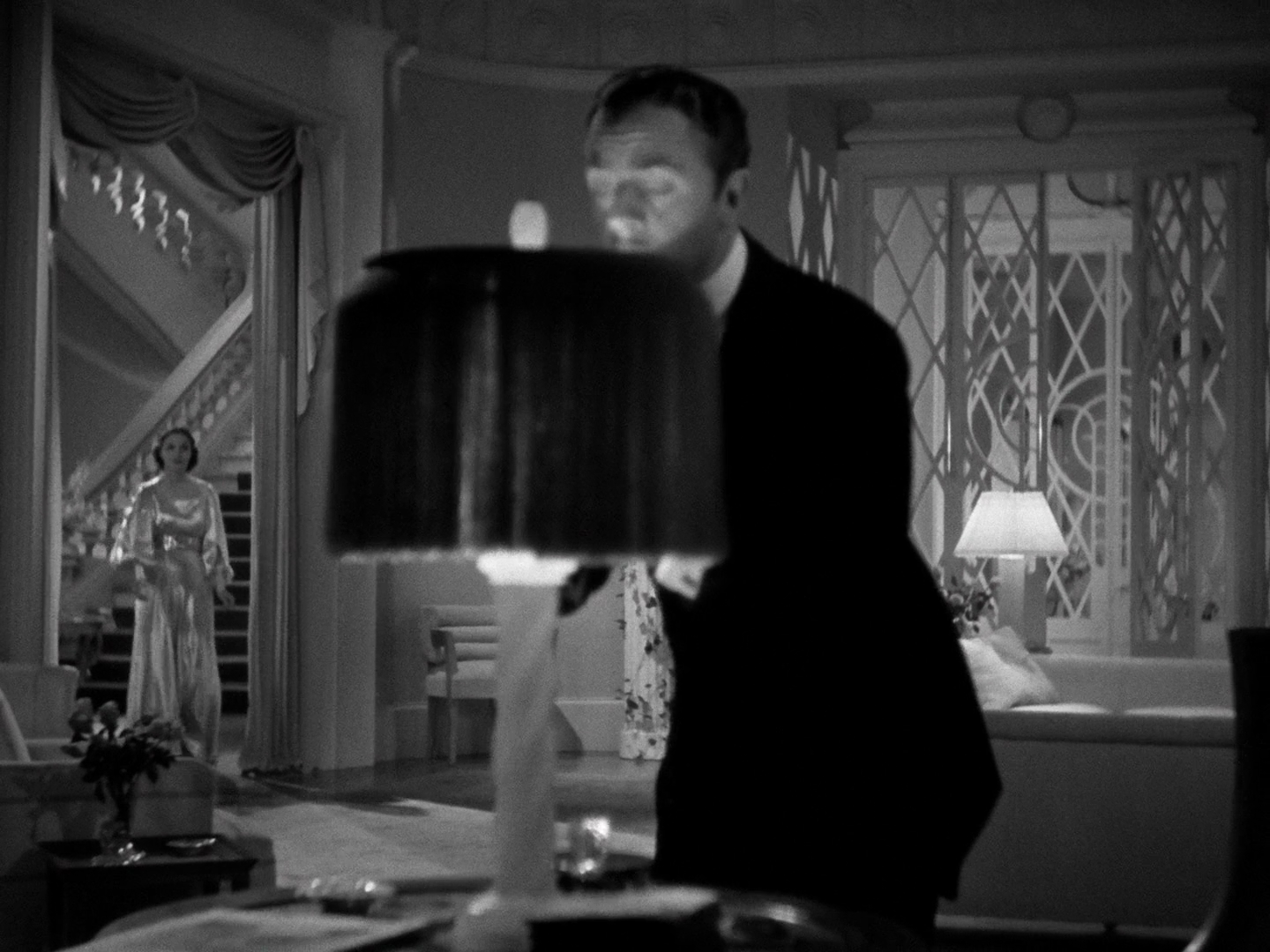
- So it wasn’t a complete surprise to discover Tetzlaff used similar techniques to better effect in another film.